
Embedding Evidence in the New Climate Finance Landscape: Evaluation, Efficiency and Climate Finance Decision-Making
Public climate finance has grown roughly sevenfold in fifteen years, from around USD 20 billion in 2010 to over USD 136 billion in 2025 (OECD, 2026), yet the evaluative evidence base has not kept pace. Analysis by the Center for Global Development (Cichocka and Mitchell, 2024) finds that less than one rigorous evaluation exists per USD billion of official development assistance spent on climate mitigation, and roughly 2.5 per USD billion spent on adaptation, compared with 136 evaluations per USD billion in nutrition. This session asks a purposely practical question: given that climate finance is stalling, at least in terms of finance flowing from traditional Annex I parties to developing countries, what would it take to close this gap at the speed that climate emergencies are moving?
In this policy dialogue, panelists, spanning bilateral and multilateral funds, private funders, and evidence specialists, will debate concrete, contestable propositions such as whether investment committees within climate funds (the Adaptation Fund, the Green Climate Fund, the Global Environment Facility) should require a stated evidence position at the concept-note stage rather than at final approval; whether minimum evaluation standards should be developed, and who would be best placed to coordinate that effort; whether the inconsistent application of Rio markers across bilateral and multilateral taxonomies is primarily a measurement problem or an incentive problem; and whether, and how, project cycles can generate credible evidence for interventions whose payoffs unfold over decades.
The panel will draw on, and test against, the CGD ‘spending blind’ analysis as its evidentiary anchor, using it to surface where the diagnosis is contested among funders and evaluators themselves. The discussion will move from diagnosis to solutions and decision points: where in a funding cycle would evidence need to arrive, in what form, and delivered by whom, for it to change what gets approved. In turn, how evidence generation can accelerate and innovate to support decision-making more responsively. The session will close with panelists reflecting on specific, checkable actions that organizations and the sector as a whole can take to narrow this evidence-to-funding gap.
Speakers



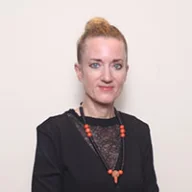
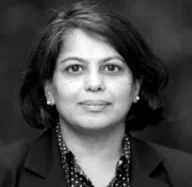
Director, Independent Evaluation Office, Global Environment Facility
 Global Environment Facility Independent Evaluation Office

Participating organisations
 International Initiative for Impact Evaluation - 3ie
 Adaptation Fund
 New Development Bank
- Global Environment Facility Independent Evaluation Office