
Building Climate-Resilient Waste Systems in the Global South
From Global Mitigation Potential to Local Implementation: Evidence from Brazil, Algeria, and Pakistan
Building Climate-Resilient Waste Systems in the Global South
Waste management is a critical but often underprioritized component of climate mitigation and sustainable development. Municipal solid waste, livestock waste, and industrial resource flows contribute to greenhouse gas emissions while offering opportunities for methane reduction, resource recovery, renewable energy production, and circular economic development. However, realising these opportunities requires more than technology. It demands effective governance, appropriate financing, institutional capacity, and meaningful stakeholder participation.
This session brings together research from global emissions modelling and country-specific experiences in Brazil, Algeria, and Pakistan to examine how evidence can inform practical, context-appropriate waste management strategies in the Global South.
The presentations address four complementary dimensions:
Global climate mitigation potential: An assessment of how improved solid waste management could reduce global warming, contribute to the Paris Agreement temperature goals, and support the Global Methane Pledge. The research highlights the urgent need to accelerate reductions in methane, carbon dioxide, and nitrous oxide emissions.
Brazil – From methane potential to implementation: Evidence from livestock waste management demonstrates how spatial diagnostics, appropriate technologies, financing, and enabling policies can translate methane mitigation opportunities into practical interventions, including biogas, biomethane, and nutrient recovery.
Algeria – Industrial circular economy: A proposed implementation framework examines how policy alignment, industrial symbiosis, resource efficiency, and knowledge transfer can address structural barriers to circular economy adoption in manufacturing.
Pakistan – Governance and stakeholder engagement: Empirical research involving 420 stakeholders examines how economic, social, technical, environmental, and institutional dimensions interact with stakeholder engagement to influence sustainable solid waste management strategies.
Together, these studies explore three strategic questions:
-
How can countries accelerate waste-sector emissions reductions while contributing to global climate commitments?
-
Which technological, institutional, financial, and social conditions are necessary to translate mitigation potential into effective implementation?
-
How can circular economy strategies strengthen local capabilities, stakeholder participation, and sustainable development outcomes?
By connecting global climate evidence with implementation experiences across the Global South, the session aims to identify transferable lessons for policymakers, researchers, development institutions, and practitioners.
The central message is that climate-resilient waste systems cannot be built through technology alone. Effective mitigation requires integrating credible emissions evidence with locally appropriate solutions, enabling policies, financing, and inclusive governance.
Curbing global solid waste emissions toward net-zero warming futures
Zheng Xuan Hoy (Institute for Global Environmental Strategies), Kok Sin Woon* (Hong Kong University of Science and Technology (Guangzhou)), Wen Cheong Chin (Xiamen University Malaysia), Yee Van Fan (University of Oxford), Seung Jick Yoo (Sookmyung Women's University)
No global analysis has considered the warming that could be averted through improved solid waste management and how much that could contribute to meeting the Paris Agreement’s 1.5° and 2°C pathway goals or the terms of the Global Methane Pledge. With our estimated global solid waste generation of 2.56 to 3.33 billion tonnes by 2050, implementing abrupt technical and behavioral changes could result in a net-zero warming solid waste system relative to 2020, leading to 11 to 27 billion tonnes of carbon dioxide warming–equivalent emissions under the temperature limits. These changes, however, require accelerated adoption within 9 to 17 years (by 2033 to 2041) to align with the Global Methane Pledge. Rapidly reducing methane, carbon dioxide, and nitrous oxide emissions is necessary to maximize the short-term climate benefits and stop the ongoing temperature rise.
From Methane Potential to Climate Action: Lessons from Brazil’s Livestock Waste Management for the Global South
Authors and affiliations: Alessandro Sanches Pereira¹; Deisi Cristina Tapparo¹; Gladis Maria Backes Bühring¹; Heloisa Campeão Rodrigues¹; Larissa Boing¹; Crislaine Florzino Flor¹.
¹ Instituto 17 (i17), Brazil.
Livestock waste is a major source of methane emissions but also offers opportunities for climate mitigation, renewable energy, nutrient recovery and rural development. This evidence synthesis examines Brazil’s experience to identify how methane mitigation potential can be translated into implementable strategies relevant to the Global South. The analysis combines documentary research, technical expert analysis and consultation with key sector stakeholders. It integrates evidence on livestock value chains and production systems, spatial distribution of waste and mitigation potential, context-appropriate technologies, barriers to adoption, enabling policies, finance and social inclusion. The evidence shows that technological potential alone is insufficient for effective mitigation. Implementation requires spatially explicit diagnostics, technologies adapted to production scale and local conditions, supportive institutional and financial arrangements, and mechanisms to identify and address barriers. Brazil’s experience also demonstrates opportunities to connect methane mitigation with biogas, biomethane, biofertilizers and improved waste management. Rather than prescribing a single technological solution, the framework provides a replicable process for identifying priority regions, appropriate technologies and policy interventions. It offers a practical pathway to translate methane commitments into livestock-sector action while integrating climate, economic, and social objectives.
A Framework for Circular Economy Implementation to Drive Sustainable Industrial Growth in the Algerian Manufacturing Sector
This paper develops a framework for implementing circular economy (CE) principles within the Algerian manufacturing sector, addressing the structural barriers that prevent industrial actors from transitioning toward more sustainable production models. Algeria's manufacturing base, historically dependent on linear resource flows tied to hydrocarbon revenues, faces mounting pressure to decarbonize and diversify under both domestic industrial policy imperatives and international climate commitments. The paper argues that CE implementation in this context requires a sector-specific approach that accounts for regulatory gaps, limited green finance access, supply chain fragmentation, and low awareness of CE practices among industrial managers. The framework identifies four implementation pillars: policy alignment, industrial symbiosis, resource efficiency standards, and knowledge transfer mechanisms. Each pillar is grounded in empirical analysis of current manufacturing practices and barriers drawn from the Algerian industrial context. The paper concludes with actionable recommendations for policymakers, industrial associations, and international development partners seeking to accelerate CE adoption in emerging manufacturing economies with similar structural profiles.
Author: Siham Bouguern, Independent Researcher, Algeria.
Integrating Sustainability Dimensions and Stakeholder Engagement in Solid Waste Management in Developing Countries: Evidence from Pakistan
Rapid urbanization and population growth have intensified solid waste management (SWM) challenges in developing countries, where institutional capacity and stakeholder participation remain limited. Existing studies, particularly in the context of Pakistan, largely examine isolated technical or environmental aspects, with limited integration of sustainability dimensions and stakeholder dynamics. This empirical study develops and validates an integrated Structural Equation Modeling (SEM) framework to examine the interrelationships among Sustainable Solid Waste Management Systems (SSWM), Stakeholder Engagement (SE), and Solid Waste Management Strategies (SWMS). Primary data were collected from 420 stakeholders representing diverse groups. The measurement model demonstrated strong reliability and validity, while the structural model exhibited excellent fit indices. Results indicate that economic, social, technical and environmental, and institutional dimensions significantly shape SSWM. Structural path analysis reveals that SSWM significantly influences SE and SWMS, while SE has a significant effect on SWMS. Mediation analysis confirms that SE partially mediates the relationship between SSWM and SWMS, highlighting the critical role of participatory governance. The findings demonstrate that achieving sustainable waste management requires the integration of system-level capacity, stakeholder engagement, and strategic implementation. This study contributes to the sustainability literature by providing a holistic framework and evidence for policymakers seeking to promote circular-economy practices, resource efficiency, and climate-aligned waste-sector implementation in developing countries.
Authors and affiliations:
Mansoor Ahmad Khan, Sikandar Bilal Khattak, University of Engineering and Technology Peshawar, Pakistan
Muhammad Abas and Qazi Muhammad Usman Jan, Faculty of Engineering, University of Tabuk, Saudi Arabia.
Speakers

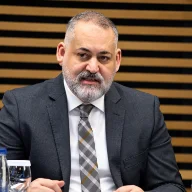
- SB
- SK
- MK
Assistant Professor
Department of Civil Engineering, University of Engineering and Technology Peshawar
- MA
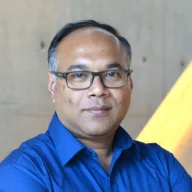
Co-Director | Global South Nexus (GSN), Curtin University; Member | UN Council of Engineers for the Energy Transition
 Global South Nexus (GSN), Curtin University
Moderator
Participating organisations
- Hong Kong University of Science and Technology (Guangzhou)
- Instituto 17
- IU International University of Applied SciencesOrganiser
- University of Engineering and Technology Peshawar, PakistanOrganiser