
Blue Economy
Novel marine-climate interventions: evaluation of responsible innovation and governance preparedness
Emily M. Ogier 1,2, Gretta T. Pecl 1,2, Terry Hughes3, Sarah Lawless3,4, Cayne Layton 1,2, Kirsty L. Nash 2,3 & Tiffany H. Morrison3,5,6
1Institute of Marine and Antarctic Studies, University of Tasmania, Hobart, Tasmania, Australia.
2Centre for Marine Socioecology, University of Tasmania, Hobart, Tasmania, Australia.
3College of Science and Engineering, James Cook University, Townsville, Queensland, Australia. 4Australian Institute of Marine Science, Townsville, Queensland, Australia.
5School of Geography, Earth and Atmospheric Sciences, University of Melbourne, Parkville, Victoria, Australia.
6Environmental Policy Group, Wageningen University Research, Wageningen, the Netherlands.
Novel marine-climate interventions are now being rapidly implemented to address both the causes and consequences of warming oceans. However, the governance implications of proposed upscaling of such interventions are uncertain. A survey of 332 intervention practitioners was undertaken and identified five types and 17 sub-types of interventions proposed or deployed in 37 marine systems globally. Most (71%) report marine-climate interventions aimed at supporting species and ecosystem adaptation, with 29% aimed primarily at climate mitigation and societal adaptation.
Survey findings highlight low consensus across practitioners on the climate goals and benefits of specific interventions. Intervention decision-making is focused on technical feasibility to meet minimum permitting requirements, with limited monitoring, appraisal and management of broader ecological, cultural, social and bioethical risks and benefits (>50% of interventions described). Practitioners report that many marine-climate interventions are currently being tested and deployed in an under-regulated pseudo-scientific bubble. Overcoming the pacing problem in implementation of responsible governance practices – including formal evaluation - requires continued scientific leadership and engagement of other actors.
Making Waves: World Bank Support for the Blue Economy
The World Bank has been instrumental in shaping national and regional blue economy strategies. The Bank’s definition of the blue economy and its analytics have informed official roadmaps in multiple countries and are referenced by regional bodies spanning Africa, the Indian Ocean, and the Pacific. With a portfolio of 156 projects across 109 coastal countries and over $220 million channeled through the PROBLUE trust fund, its experience and influence on advancing a blue economy carry immense weight. This support is critical as healthy oceans hold significant and largely untapped potential for climate action, from blue carbon sequestration to the protection of coastal ecosystems that buffer communities against climate impacts. "Making Waves: World Bank Support for the Blue Economy, 2012–23" is a published, peer-reviewed independent evaluation by the World Bank's Independent Evaluation Group that rigorously examines how effectively the World Bank has supported a genuinely integrated blue economy. Its findings offer actionable lessons for practitioners, policymakers, negotiators, and financiers working on ocean-climate action.
The evaluation's central finding is structural. Managing fisheries, tourism, ports, aquaculture, and marine pollution as separate sectors will not produce a sustainable blue economy. Yet the World Bank has overwhelmingly addressed them one sector at a time. Genuine integration requires cross-sectoral governance anchored to a shared ecological system, with tools to manage spatial trade-offs, land-sea interactions, and climate risk. This is a message that speaks directly to COP31, where governments, financiers, conservation practitioners, fisheries managers, urban planners, and climate negotiators will be present in the same space. It is precisely that cross-sectoral community that ocean health depends on, and this evaluation gives them the evidence to act.
Understanding Climate Change with MOFOMO -- A Multi-Modal Foundation Model Digital Twin of the Ocean
The ocean absorbs about a quarter of human CO2 emissions and 90% of the resulting excess heat, and marine microbes drive the biological pump that exports carbon to the deep. Whether that service holds under warming and deoxygenation depends on how microbial metabolism responds to its environment at depth. The evidence is fragmented: environmental, genomic and biological observations sit in separate programmes and formats, and the machine-learning models used to connect them are mostly opaque, limiting their use in policy. We draw on one peer-reviewed 2025 publication introducing Hierarchical Multiview Symbolic Regression, an evolutionary method that discovers closed-form equations linking environmental drivers to functional-gene abundance across ocean depth layers. Each layer is a separate view; hierarchical constraints impose global consistency while allowing local biological specificity; pathway-level priors group functions of the same metabolic process; and equations are selected for accuracy, simplicity and cross-layer coherence. Tested on depth-resolved genomic and environmental data from global ocean expeditions against state-of-the-art alternatives, the method improves interpretability and cross-view consistency while recovering biologically meaningful relationships. Three lessons follow. First, interpretable equations make ocean-climate evidence auditable by scientists and readable by decision-makers. Second, structure beats volume: cross-layer constraints extract robust signal from sparse, costly expedition data, as in most Global South observing systems. Third, explainable relationships bridge observation and forecasting; they form the biology layer of MOFOMO, an open multimodal ocean foundation-model initiative whose pilots target harmful-algal-bloom advisories for aquaculture and coral-reef early warning. For COP31 and UN Ocean Decade Challenge 8, this evidence argues for treating open, interpretable ocean-data infrastructure as adaptation capacity.
Speakers
- EO
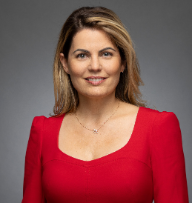
Associate Profressor, Marine Social Sciences
Institute for Marine and Antarctic Studies, University of Tasmania, and the Centre for Marine Socioecology
- TM

Lead Evaluation Officer, Independent Evaluation Group, World Bank Group
Independent Evaluation Group, World Bank Group
- JB
Evaluation Officer, Independent Evaluation Group, World Bank Group
Independent Evaluation Group, World Bank Group

Participating organisations
- Institute for Marine and Antarctic Studes, University of Tasmania, and the Centre for Marine SocioecologyOrganiser
- The Independent Evaluation Group of the World Bank GroupOrganiser
 Inria ChileOrganiser